Comparison
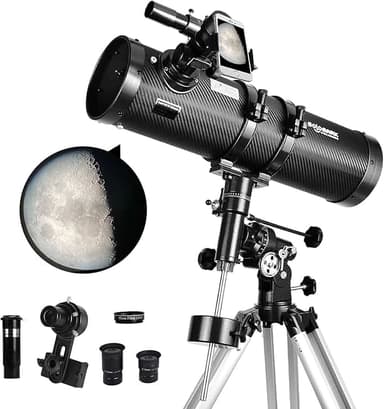
Celestron StarSense Explorer LT 80AZ vs Telescope 130EQ Newtonian Reflector Telescopes for Adults
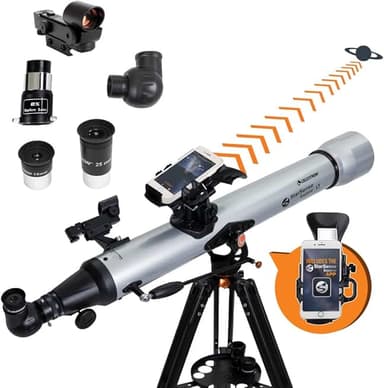
VS
Performance Profile
Score Comparison
Celestron StarSense ExplorerTelescope 130EQ Newtonian
Overall
67
70
Value
79
81
Beginner
44
43
Astrophoto
37
51
Portability
62
47
Planetary
43
44
Deep Sky
37
40
Our Take
The Telescope 130EQ Newtonian Reflector Telescopes for Adults edges out the Celestron StarSense Explorer LT 80AZ, though this isn't a decisive victory. The single most important differentiator is aperture; the 130mm mirror gathers 64 percent more light than the 80mm refractor, translating to superior deep sky performance and a noticeable advantage for planetary observation under good conditions. The 130EQ's equatorial mount also enables straightforward celestial tracking for extended viewing sessions.
However, the Celestron StarSense offers tangible benefits for certain observers. Its StarSense technology provides automated object location, which genuinely improves the beginner experience despite lower beginner scores. The refractor also delivers crisp, high-contrast views of the moon and bright planets, with minimal maintenance compared to reflectors.
The Celestron StarSense Explorer LT 80AZ suits astronomers prioritizing ease of use, portability, and lunar observation in urban environments. The Telescope 130EQ Newtonian Reflector Telescopes for Adults is better for those willing to accept greater weight and complexity in exchange for superior light-gathering and deep sky capabilities. Choose the 130EQ if you're serious about exploring galaxies and nebulae; choose the Celestron if convenience and automated finding matter more than raw aperture.
Key Differences
Why choose Celestron StarSense Explorer
- $40 cheaper
- 10.5kg lighter and more portable
- Higher Portability score (62 vs 47)
Why choose Telescope 130EQ Newtonian
- 130mm aperture gathers more light than 80mm
- Higher Astrophoto score (51 vs 37)
- 1,290 Amazon reviews vs 566
Specifications
SpecCelestron StarSense ExplorerTelescope 130EQ Newtonian
Optical Specs
Aperture80mm130mm
Focal Length900mm-
Focal Ratiof/11.3-
Optical DesignAchromat RefractorNewtonian
Coating-Coated
Mount & Tracking
Mount TypeAlt-AzEquatorial
GoToNoNo
TrackingYesYes
Physical
Weight4.17kg14.7kg
Included Accessories
FinderStarPointerFinder scope
Pricing & Reviews
Price$230$270
Amazon Rating4.3 stars4.3 stars
Reviews5661,290
Try these telescopes in our Eyepiece Calculator:
Related Comparisons
Explore Scientific AR 80/900 vs Telescope 130EQ Newtonian Reflector Telescopes for AdultsTelescope 130EQ Newtonian Reflector Telescopes for Adults vs Telescope for Adults High PoweredSVBONY SV503 80mm ED Refractor vs Telescope 130EQ Newtonian Reflector Telescopes for AdultsCelestron StarSense Explorer LT 80AZ vs SVBONY SV503 80mm ED RefractorCelestron 1.25 Inch X-Cel LX 3X Barlow Lens, Black vs Celestron StarSense Explorer LT 80AZCelestron StarSense Explorer LT 80AZ vs Telescope for Adults High Powered