Comparison
Celestron AstroMaster 114EQ vs Celestron StarSense Explorer LT 80AZ
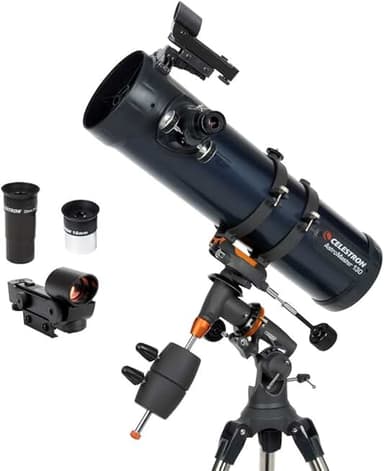
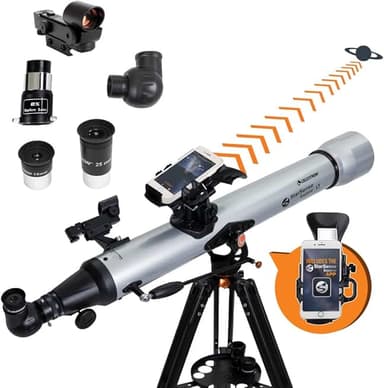
VS
Performance Profile
Score Comparison
Celestron AstroMaster 114EQCelestron StarSense Explorer
Overall
70
67
Value
75
79
Beginner
45
44
Astrophoto
46
37
Portability
60
62
Planetary
47
43
Deep Sky
39
37
Our Take
The AstroMaster 114EQ wins this matchup, though it's closer than the overall scores suggest. The critical differentiator is aperture; the 114mm mirror gathers 28 percent more light than the 80mm refractor, delivering noticeably brighter views of deep-sky objects and faint planetary details. This advantage translates directly across all observing categories, where the Newtonian consistently outperforms the refractor.
However, the StarSense Explorer LT 80AZ has genuine strengths. Its computerized tracking simplifies object location for beginners, it weighs two kilograms less for easier transport, and the refractor design produces sharper views of the Moon and bright planets with minimal maintenance. The $59 price difference also matters for budget-conscious buyers.
The AstroMaster 114EQ suits observers prioritizing light-gathering power and willing to invest in learning equatorial mount operation; the StarSense Explorer LT 80AZ appeals to casual observers who value portability, automation, and planetary observation above all else. Most amateur astronomers seeking the best value and versatility should choose the Celestron AstroMaster 114EQ, as its superior aperture provides clearer advantages for the modest price premium and slightly greater bulk.
Key Differences
Why choose Celestron AstroMaster 114EQ
- 114mm aperture gathers more light than 80mm
- Faster f/8.8 for wider field of view
- 1,446 Amazon reviews vs 566
Why choose Celestron StarSense Explorer
- 1.8kg lighter and more portable
- Has tracking capability for astrophotography
Specifications
SpecCelestron AstroMaster 114EQCelestron StarSense Explorer
Optical Specs
Aperture114mm80mm
Focal Length1000mm900mm
Focal Ratiof/8.8f/11.3
Optical DesignNewtonianAchromat Refractor
Mount & Tracking
Mount TypeEquatorialAlt-Az
GoToNoNo
TrackingNoYes
Physical
Weight6.02kg4.17kg
Included Accessories
FinderStarPointerStarPointer
Pricing & Reviews
Price$245$230
Amazon Rating4.4 stars4.3 stars
Reviews1,446566
Try these telescopes in our Eyepiece Calculator:
Related Comparisons
Celestron AstroMaster 114EQ vs Telescope, 150EQ Newtonian Reflector Telescope for Adults Astronomy BeginnersCelestron AstroMaster 114EQ vs Explore Scientific FirstLight 114mmCelestron StarSense Explorer LT 80AZ vs SVBONY SV503 80mm ED RefractorCelestron 1.25 Inch X-Cel LX 3X Barlow Lens, Black vs Celestron StarSense Explorer LT 80AZCelestron StarSense Explorer LT 80AZ vs Telescope for Adults High PoweredCelestron AstroMaster 114EQ vs Explore Scientific AR 80/900